• FaceBook
  • Twitter
  • LinkedIn
  • youtube
  • Instagram
Leave Your Message

How to Choose the Right Drainage Pump in 2026?

Choosing the right Drainage Pump in 2026 requires more than comparing motor power or purchase prices. Real drainage conditions can change quickly. A basement may contain clear water today, then muddy water after heavy rain. Construction sites may add sand, gravel, or fibrous debris. These details affect pump performance, service life, and safety.

Pump reliability author Heinz P. Bloch offers a useful principle: “The best pump is the one that operates reliably within its design limits.” His point remains practical. A pump must match the required flow rate, lifting height, discharge distance, and water quality. A small pump may struggle with a long hose and high head. An oversized unit may waste energy and cycle too frequently. Neither choice is automatically better.

I have seen users focus on litres per minute while ignoring the total head. That mistake can leave a powerful-looking pump barely moving water. Check the outlet size, hose length, solids-handling capacity, and continuous-duty rating. For a basement, a reliable float switch and corrosion-resistant housing may matter more than maximum output. For a worksite, a rugged strainer and replaceable wear parts deserve closer attention. Smart monitoring can also reveal blocked inlets or abnormal running times before failure occurs.

There is no universal answer. I would still question any recommendation based only on horsepower. Measure the site first. Then compare verified specifications from reputable manufacturers and distributors. A careful choice may appear slower, but it usually prevents flooded floors, repeated callouts, and unnecessary replacement costs.

How to Choose the Right Drainage Pump in 2026?

What a Drainage Pump Does and Where It Fits

How to Choose the Right Drainage Pump in 2026?

What a Drainage Pump Does and Where It Fits

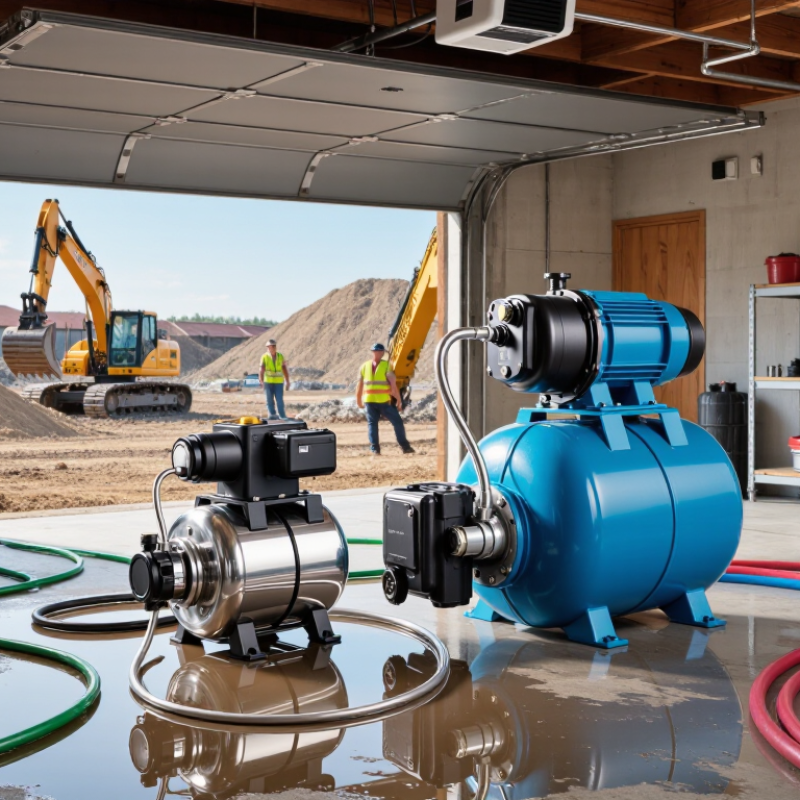
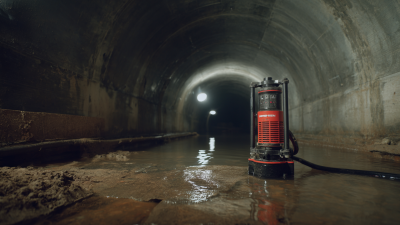
A drainage pump removes unwanted water from places where gravity cannot help. It may clear a flooded basement, a shallow sump pit, or rainwater from a construction area. Most drainage pumps handle relatively clean water or small particles. They are not automatically suitable for sewage or thick sludge. That distinction matters.

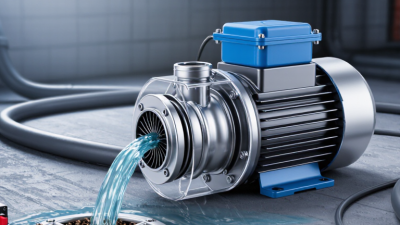
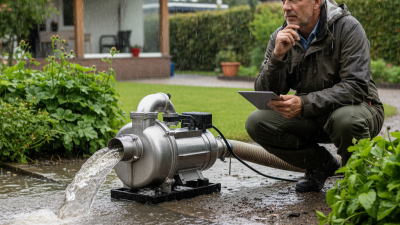
The pump sits at the lowest practical point. A submersible model works inside the water, while a surface pump stays outside and draws water through a hose. Selection depends on flow rate, lifting height, discharge distance, and available power. A pump may move 200 liters per minute, but its output drops as the discharge rises. This detail is easy to miss. On real sites, a powerful-looking pump can still drain slowly because the hose is narrow or too long.

Tips: Measure the vertical lift from the water surface to the outlet. Check the pump curve, not only the advertised flow rate. Use a filter when leaves, gravel, or mud are present. Test the float switch before heavy rain arrives. Keep electrical connections dry and follow qualified installation requirements. I once assumed a larger pump was always better; it was noisier, less efficient, and poorly matched to the pit. Rechecking the site usually reveals the wiser choice.

How to Choose the Right Drainage Pump in 2026?

A drainage pump removes unwanted water from areas such as basements, sumps, trenches, and construction sites. Compare nominal capacity before checking head height, solids handling, power supply, and discharge-hose size.

Reference conversion: 1 m³/h equals 16.67 L/min. Actual output decreases as lifting height, hose length, bends, and debris resistance increase.

How to Calculate Required Flow Rate and Pumping Head

How to Choose the Right Drainage Pump in 2026?

Required flow rate begins with water volume and response time. Use Q = V ÷ t, then add expected inflow. For example, a 12 m³ basement pit must empty within 30 minutes. Its base flow is 24 m³/h. If incoming water adds 2 m³/h, the working requirement becomes 26 m³/h. A modest reserve, perhaps 20%, gives about 31 m³/h. Do not oversize casually. Excess capacity can increase cycling, noise, and energy use.

Pumping head includes vertical lift, pipe friction, fittings, and outlet pressure. Measure from the lowest operating water level to the discharge point, not from the pit floor. A pump lifting water 4 metres may face 2 metres of friction loss through a long, narrow pipe. Add both values before checking the pump curve. Hydraulic Institute guidance supports selecting pumps near their best efficiency region, while U.S. Department of Energy materials report that pumping systems may account for roughly 25% of industrial electricity use. Efficiency matters.

My first estimate would remain provisional. Wet-well levels change. Pipes collect debris. Ten elbows can matter more than expected. Check the actual flow at the proposed head, rather than trusting the maximum rating. Keep measured rainfall, inflow, pipe length, and start-stop frequency in a simple log. That record often exposes weak assumptions.

Which Pump Type Matches Your Water and Site Conditions

Choosing the right drainage pump starts with the water, not the pump label. Clean rainwater may suit a clear-water submersible pump. Muddy runoff needs a larger passage and abrasion-resistant materials. Wastewater demands a solids-handling design, especially when wipes, grit, or fibrous debris may enter the pit.

Measure the site carefully. Flow rate shows how quickly water must leave. Total head includes vertical lift, pipe friction, bends, and the discharge outlet. A pump rated for high flow may fail when the lift increases. U.S. Department of Energy pump-system guidance reports that pumping uses about 25% of industrial electricity, so oversizing can create costly, continuous waste. I have seen small pits with powerful pumps cycle too often. That shortens motor life.

Check solids size, water temperature, pH, and expected duty hours. The Hydraulic Institute recommends evaluating the complete system curve, not only the pump’s maximum capacity. For flood-prone sites, NOAA rainfall data can help estimate local storm intensity, while the WMO State of Global Water Resources reports increasingly uneven water conditions worldwide. These figures guide planning, but they cannot replace a site inspection. Measure twice. Leave margin. My own caution is simple: calculated conditions may look precise, yet blocked screens, poor float placement, or a forgotten backflow valve can change performance overnight.

How to Compare Power, Materials, Controls, and Maintenance

How to Choose the Right Drainage Pump in 2026?

Choosing a drainage pump starts with the real duty point, not the largest motor. Measure required flow, vertical lift, pipe length, and discharge resistance. A pump rated for high flow may struggle when the outlet rises several meters. Check starting current, too, because weak electrical supplies can trip unexpectedly. Small mistakes here become expensive downtime.

Materials should match the water. Cast iron suits many general drainage jobs, while stainless steel handles corrosive or salty conditions better. Inspect the impeller design when solids are present. Leaves, gravel, and sludge can block narrow passages. A screened inlet helps, but screens need frequent cleaning. That detail is often overlooked.

Controls should be simple enough for a tired technician to understand at night. Float switches, thermal protection, dry-run safeguards, and high-level alarms add practical security. Confirm that the control panel has suitable environmental protection for wet rooms.

Maintenance access matters as much as performance. Look for removable covers, clear inspection points, and replaceable seals. Keep a log of vibration, current draw, noise, and cleaning dates.

I used to focus too heavily on motor power. Field conditions taught me that access and control quality often decide reliability. Even a well-sized pump can fail early when maintenance is awkward or ignored.

How to Verify Safety, Efficiency, Installation, and Long-Term Cost

How to Choose the Right Drainage Pump in 2026?

A safe drainage pump must match the site, not just the advertised flow rate. Check its maximum head, duty point, motor protection, and enclosure rating. A grounded circuit and residual-current protection are essential in wet areas. Look for clear safety instructions and recognized testing documentation. Never ignore unusual vibration, heat, or repeated float-switch cycling. Small warnings become expensive failures.

Efficiency depends on real operating conditions. Measure the vertical lift, pipe length, bends, and expected flow before choosing capacity. An oversized pump may start too often and waste electricity. An undersized model may run continuously and overheat. Installation also matters. Use the correct discharge diameter, a reliable check valve, and enough access for cleaning. Keep the float switch away from cables and sediment. I once underestimated pipe friction during a small installation. The pump worked, but not efficiently. That mistake changed my selection process.

Tips: Calculate total cost over several years. Include electricity, replacement parts, inspection time, and possible water damage. Ask for a service schedule and confirm spare-part availability. Keep a simple log of running hours and unusual sounds. It exposes gradual problems earlier. A lower purchase price can hide higher energy use. Review the numbers honestly, because the cheapest option is not always economical.

How to Choose the Right Drainage Pump in 2026? - How to Verify Safety, Efficiency, Installation, and Long-Term Cost

A practical comparison framework for selecting a drainage pump according to site conditions, operating requirements, safety controls, and total ownership cost.

Decision Area Evaluation Criterion How to Verify Before Purchase Practical Reference Point Long-Term Cost Impact
Safety Electrical protection Required
Confirm the rated voltage, grounding method, insulation condition, cable construction, and protection against moisture. Installation should include suitable overcurrent protection and a residual-current device where required by local electrical rules.
The pump must match the available power supply. Never use a damaged cable, remove the ground connection, or operate a non-submersible pump in water. Correct protection reduces the risk of electric shock, motor damage, emergency replacement, and downtime.
Safety Motor overload and dry-run protection Check whether the pump has thermal overload protection and whether the control system can stop the pump when the water level becomes too low. A float switch, level sensor, or control panel should prevent continuous operation without sufficient water. Verify the switching range during commissioning. Protection helps prevent overheating, seal failure, and premature motor replacement.
Safety Fluid compatibility Identify the liquid temperature, pH, suspended solids, fibers, oils, and possible corrosive or abrasive materials. Compare these conditions with the pump's documented limits. Clear water, gray water, sewage, and abrasive slurry require different hydraulic passages, seals, impellers, and materials. Choosing unsuitable materials can cause corrosion, clogging, leakage, and repeated maintenance costs.
Efficiency Required flow rate Calculate the required volume per unit of time rather than selecting a pump only by outlet size. Consider inflow rate, tank volume, peak rainfall, and acceptable drainage time. Flow rate is normally stated in L/min, m³/h, or gal/min. Convert all values to the same unit before comparing models. An oversized pump can increase purchase and energy costs; an undersized pump may run continuously and fail to control water levels.
Efficiency Total dynamic head Add the vertical lift from the water surface to the discharge point to the friction loss in the pipe, fittings, valves, and check valve. Use the pump curve at the actual operating point. The published maximum head is not the same as the head available at the required flow rate. Correct head selection avoids low flow, excessive runtime, and energy wasted by using an unsuitable pump.
Efficiency Energy consumption Compare input power in watts or kilowatts at the expected flow and head. Where available, review efficiency data across the complete operating range. Estimated annual energy use = input power in kW × operating hours per year. Actual consumption depends on duty cycle and system resistance. A slightly higher purchase price may be justified if the pump operates many hours per year at lower energy consumption.
Installation Discharge pipe sizing Confirm that the pipe diameter, hose length, fittings, and check valve are compatible with the pump outlet and expected flow. Avoid unnecessarily long or narrow discharge lines because they increase friction loss. Support the pipe independently instead of hanging it from the pump. Proper piping improves performance and reduces energy use, vibration, blockages, and pipe replacement.
Installation Pump placement and intake clearance Check the minimum water depth, solid-particle passage, base stability, and required clearance around the intake. Keep the pump away from loose sediment where possible. Place the pump on a stable, level surface or use an appropriate guide system. Do not lower or lift the pump by its electrical cable. Correct placement reduces clogging, impeller wear, noise, and accidental cable damage.
Installation Automatic level control Test the float switch or sensor through several start-and-stop cycles. Ensure it can move freely and cannot become trapped against the tank wall or pipe. The start level, stop level, and minimum water level should suit the tank geometry and the pump's permitted operating conditions. Reliable automatic control limits unnecessary runtime and reduces the chance of overflow or dry running.
Installation Maintenance access Confirm that the strainer, impeller area, check valve, control components, and lifting points can be inspected without unsafe access or complete system replacement. A removable access cover, serviceable intake, and clear maintenance instructions are useful for sites exposed to debris. Easier maintenance lowers labor time and helps detect wear before a major failure occurs.
Long-Term Cost Purchase and installation cost Compare the pump, control panel, cables, level controls, pipework, valves, fittings, lifting equipment, and professional installation as one package. The lowest pump price is not necessarily the lowest installed cost. Include any required electrical or structural modifications. A complete cost estimate prevents budget overruns caused by accessories and site preparation.
Long-Term Cost Routine maintenance Review the recommended inspection interval, cleaning procedure, seal inspection requirements, spare-part availability, and expected service labor. Maintenance frequency should reflect the liquid quality and duty cycle. Pumps handling debris generally need more frequent inspection than clean-water applications. Predictable maintenance costs are preferable to unplanned emergency repairs and production interruptions.
Long-Term Cost Expected service life and repairability Check the availability of replacement seals, bearings, impellers, cables, floats, and control components. Review the documented duty rating and service conditions. Select equipment that can be repaired with standard replacement parts rather than requiring full replacement after a minor failure. Repairable construction can reduce lifecycle cost, waste, and downtime over several years of operation.
Verification Performance documentation Request the pump curve, rated flow, rated head, input power, maximum liquid temperature, maximum solid passage, protection rating, and operating limitations. Use documented test data and the actual system duty point. Do not rely only on maximum flow or maximum head values shown separately. Complete technical data reduces the risk of buying a pump that appears powerful but performs poorly in the real installation.
Verification Commissioning test Test automatic start and stop, flow rate, discharge pressure, current draw, vibration, leakage, noise, and alarm functions after installation. Record baseline readings during normal operation so future changes can be identified during maintenance. Baseline measurements make early fault detection possible and can prevent expensive secondary damage.
Selection reminder: Choose the pump using the real operating point—required flow rate, total dynamic head, liquid characteristics, duty cycle, electrical supply, and control method. Local electrical, building, wastewater, and workplace-safety requirements should always take priority.